Showing posts with label jack perks. Show all posts

Wednesday, 30 December 2015

Top Ten Wildlife Experiences of 2015

2015 has been a great year for me and enjoyed many wildlife spectacles and events that I've been wanting to do for a long time. I often get a bit blasé with the locations and wildlife I see so Its nice to take a look back on the year and see what I've gotten up to.

10. In Pursuit 


 Filming for 'In Pusuit' in France

Many of you reading this will well know I'm quite keen on fish so its no surprise that I enjoy angling also and following on from working on Mr Crabtree Goes Fishing for Skysports last year I was working on another angling series called In Pursuit. It was a great series to shoot on and as well as interviews, time lapse and presenter led work I was able to get plenty of wildlife shots which I particularly enjoyed when shooting in France for nearly a month. I had many firsts with night herons, white storks, turtle doves and a rather horny coypu trying to get in my tent which I'd rather not talk about!

                              
       Scarce Swallowtail                                                                       Hummingbird Hawk-Moth
For me the highlight of the wildlife was the moths and butterflies having been to norfolk many times to see swallowtails I was treated to dozens in a french lavendar garden (the scarce species anyway) and lots of hummingbird hawk moths really stunning insects.

9. Ospreys


Having seen ospreys both times at Birdfair I really wanted a closer view with my camera to hand and heard of a local trout farm which has had the ospreys visiting regularly grabbing the odd trout. a 4am start and short drive got me and friend Harry Hall to the hide and although we saw one fly over it wasn't meant to be. A follow up trip resulted in a much better encounter and the osprey went in to grab a rainbow trout. I did get one shot but nothing I was happy with as the light was just not out enough for my camera to get a decent shot so may warrant a return trip in 2016!

8. Cairngorms


Female Ptarmigan 


Looking back I almost forgot I'd even been to the Cairngorms this year let alone spending two weeks up there and one of them leading a photographic tour with Josh Jaggard. The first week was mostly about getting images that previously had eluded me so two grouse species were on my thoughts ptarmigan and black grouse. The ptarmigan proved relatively easy once you get your eye in and ears tweaked for there call. Black grouse however were a different kettle of fish.

Male Black Grouse 

I've used hides for many species but this was the first time I'd slept in one over night. Now conditions were more or less ideal in the night little wind, no snow and open skies and it was still bloody freezing and my sleeping bag become part of a pond with me in it! Come the morning I was wet, cold and not in a great mood with little to no sleep topping off the fact I could hear Josh snoring like a trooper next door as if to rub it in. However as soon as heard the male black grouse outside I soon forgot the past several hours and had a amazing experience with males nearly brushing up against the hide completely unaware of me. A unforgettable night and morning for many reasons!

Common Frog near the cottage

The other thing I enjoyed photographing was some of the less glamorous species up there like frogs, toads and insect larvae in the rivers.

7. Barn Owl


Barn Owl

As part of my work I'm lucky that I get to work all over the UK but I very much enjoy finding wildlife thats local to me and on the way to doing a workshop for Nottinghamshire Wildlife Trust I noticed a barn owl flying over a field. I drove down a country lane and parked up alone a fence line and sure enough the barn owl landed metres from me an amazing sight that was totally unplanned and still made it in time for my workshop.

6. Derbyshire Wildlife Trust Film


Invasive Signal Crayfish 

I've been filming various wildlife and issues along the River Derwent for Derbyshire Wildlife Trust and have really enjoyed the challenge so far as its involved many filming techniques I don't do as often as I'd like. One part was highlighting non natives like signal crayfish which has infested some rivers to the point that nothing else is found in them.

Hen Atlantic Salmon in Derbyshire

One success story is the return of salmon to Derbyshire the most inland population in the country. The film is going well and will continue into next year and be finished by september when showings will go out locally as well as being put online for anyone to see.

5. Pond Tank


Dragonfly Larvae 


There are some very talented 'pond tankers' Neil phillips springing to mind and its something I'm still learning about but have done a fair bit this year. I've found it one of the most challenging forms of wildlife photography in trying to get pictures to look natural and not like they have been taken in a shoddy aquarium much harder then in sounds! Its a great way to work with very small subjects which can be difficult to locate in a pond or river and can live in very murky water normally ruling out underwater photography.

4. Hedgehogs


Twiggy being released 

I personally have never had a issue with 'staged' wildlife shots providing people are honest about the image, hedgehogs for example are rarely out in the day unless very sick so getting daylight images of them is tough thus I headed to a hedgehog rescue centre who were released a few at dusk with just enough light to snap a few portraits off. They have had a tough time recently with massive declines so happy to provide images to the centre.

3. Springwatch/Countryfile 


As well as filming for TV this year I've featured on the other end of the camera a few times also! Springwatch was a real highlight for me and we went to the welsh wye to film what fish were hanging around. It ended up that we didn't film that many species but it was more about me and my obsession with filming lots of fish species.

Watch the clip here


Springwatch Crew 


If Springwatch wasn't enough I then was contacted by Countryfile who wanted to interview me again about fish and this time a bit closer to home in the Peak District with wild brown trout. They got in touch again for another episode this time filming something with feathers for a change! It hasn't aired yet but will be on the Winer Special Jan 4th.

2. BWPA


Highly Commended BWPA 2015 Animal Portraits

For the last 5 years I've been short listed for the British Wildlife Photography Awards but never got any further until this year when a little minnow got me in the book and the exhibition. I'm not a overly competitive photographer but its always nice to have your work recognised by peers and odd free glass of wine didn't go a miss at the private view either ;)


1. Shetland


 Stunning wildlife, stunning scenery welcome to Shetland


Shetland had long been on my wildlife destinations hitlist (which seems to get longer each year) but decided to take the plunge and get a flight to Sumburgh. I then got a hire car and had to drive 3 hours north with two ferry crossings to get to Unst which considered I'd only been driving a couple weeks prior was quite pleased I got there in one piece! The plan was to do mainly underwater but that went out the window when I got hooked on puffins and otters!

 Son and Mum in the kelp

I really wanted a image of a otter underwater and do intended to visit shetland again at some point to do but stuck to topside work mostly for this trip. Walking nearly 10 miles each day trying to spot otters along the coastline was exhausting but ended up with many encounters seeing more otters then I can remember. 

Me and Josh failing to get a puffin decent selfie


Overall its been a great year and next year looks even busier with a few projects planned, a book, on TV twice in January and much more. Have a great new years eve and a happy new year  


Jack Perks

@JackPerksPhoto
Facebook: Jack Perks Photography
Website: www.jackperksphotography.com

Tuesday, 31 March 2015

Spring in the Cairngorms National Park

I've spent a fantastic two weeks in the Cairngorms National Park the 1st week was revisiting old sites with friends while the 2nd week was my first tour as a photographic guide in the Cairngorms to 8 clients and co guide Josh Jaggard. I've been to CNP a few times now and seen a few species but wanted to go for some iconic highland species like crested tits, ptarmigan and black grouse.

Female Ptarmigan on a ski lek

My first target was a species I've never seen before the ptarmigan which is a member of the grouse family. Normally found higher up the the mountain ranges they blend in very well with the snow but in the spring time they stick out like a sore thumb making them easier to spot. I very surprised how calm they were around people and quite happy for me to crawl up to the them. This image is uncropped.

 Male with female popping her head up


Despite the snow up cairngorm it can get very warm walking around the slopes

The grouse came a little to close to get the fighting shots a problem I wish I had with more species 

Black grouse are something special and can be difficult to locate in there normal woodland habitat but in the spring they come out to lek, a breeding ritual to attract a mate and by using a hide you can get some fantastic images however theres a great deal of work involved.


I entered the hide at 5pm and stayed until 8:30am the next day sleeping in the hide so that I was there well before the lek began and in no way disturb the birds.


It was mainly the black grouse I was after however many species can be viewed like curlew, brown hare, roe deer, oyster catcher and this golden plover. Many waders come into the CNP to breed in the spring providing a interesting backdrop.

Hold territory on the moorland

The most common member of the grouse family in the cairngorms, red grouse are widely distributed in the moorland habitats of the park.

Crested Tit 

The highlands are home to many species that are rare or not found anywhere else in the UK including the crested tit. Although they live in a range of habitats on the continent the Scottish subspecies is only found in scotch pine forests.  

Scratchy enjoying a peanut 

I don't tend name wildlife when I'm photographing but while watching numerous red squirrels it was easier to give them names to identify which ones were coming to the mound to feed, this one was very confident and we called him scratchy due to the marks on his side.

Common frog enjoying the sun

Now I know most people travel to the Cairngorms to focus on some of the more sexy species but I just love my little critters, amphibians being one of them and I was pleasantly surprised to find the cottages pond full of frogs! The start of the week it was frozen over and just a couple days later full of frogs!

Male waiting for some toad love

As well as the frogs I found some toads in a burn leading into a loch. Lots of thin males were waiting in the river for the females to return and pounce on them. The toads are so focused on breeding them are very easy to approach and with try and grab passing fish and even my camera thinking its a female toad and try to mate with it.

The clients on the second week 

The second week was very enjoyable with the group and myself and Josh learned a great deal from the trip and looking forward to future trips.

Bonus Eider

On the visit home I convinced (begged) Josh to stop of in Northumberland to photograph the eiders one of my favourite birds. Ducks often look there best at this time of year just before them breed.

BBC Wildlife Local Patch Reporter
Jack Perks

@JackPerksPhoto
Facebook: Jack Perks Photography
Website: www.jackperksphotography.com

Friday, 4 July 2014

Puffins Filmed Underwater

Well i certainly live a varied life it was sea lamprey this time last week in Hampshire (see previous blog) and puffins underwater in the Farnes this week! I've been planning this shoot for a while as I'm interested in all things wild not just the scaly variety and rather then getting images and footage of puffins on the Farnes like thousands before me have i wanted to do something a little different.


To do this i went with fellow underwater photographer Rob Cuss and underwater Film Maker Ben Burville and we set out on a ribb to find the best spots to get up close to these amazing birds. The Farnes are about 4 miles of Seahouses and home to a large seabird colony puffins being one of the main attractions to visitors.


I'll freely admit I'm not a confident diver so i was slightly nervous about getting in the water but i soon got into it and saw my first puffin swim by. They are incredibly graceful underwater and inquisitive coming quite close to see what i was rather then catching sandeels though plenty of little pollock soon swam away!


As well as puffins plenty of guillemots were swimming around and it being the Farnes we got some grey seal action in also. Guillemots are also members of the auk family and slightly larger they seemed a bit more bold getting much closer then the puffins.


This seal pup came up to me in less then a metre of water while i snorkeled up to it and kept swimming away and coming back almost playing a game with me.


See the footage below


BBC Wildlife Local Patch Reporter
Jack Perks

@JackPerksPhoto
Facebook: Jack Perks Photography
Website: www.jackperksphotography.com

Monday, 2 June 2014

Pond Sucess


So very happy with my wildlife pond less then a year since i made it larger and planted the wild flowers behind and its really taking shape. I've put lots of native pond plants in the pond like water crow foot, iris and bush rushes with Lillie's and water cress in there to.


A great find for me was a damselfly i don't often get any dragonflies or damsels in the pond as until recently had little vegetation suitable for them to climb out onto and lay eggs. I'm unsure on the species so feel free to let me know.


In all the weeds a toad was also sunning himself a bit unusual as normally hidden in the log pile behind.


TIP - if your pond is looking a bit green its because of excess algae which can be harmful to some wildlife in large amounts (pets and children also should watch out for blue green algae). 


You can but chemicals to sort it but i prefer to do it naturally and one way is to put a bag of barley straw into the pond which breaks down the algae. Lots of pond plants and Daphnia will also help keep the pond clean and if the water is clearer you'll be able to see more wildlife. if you look at the top image the green colour has gone after about month.

BBC Wildlife Local Patch Reporter
Jack Perks

@JackPerksPhoto
Facebook: Jack Perks Photography
Website: www.jackperksphotography.com

Wednesday, 17 April 2013

Travelling to London for a Urban Photography Workshop organised by ideastap i really wasn't sure what to expect but turned out to be a fantastic day trip.

Led by wildlife photographer Ian Green who I'd highly recommend if you ever get the chance to do one of his workshops! as well as myself several other ideastap members came along.


 Starting of at Camley street natural park right next to st pancras this chiff chaff was hoping around after insects and posed nicely on this post.


One of the themes i got from the workshop was to include wildlife and the urban environment so trying this out here with the buildings in the background and swan in foreground.


One of the things about camely that attracted me to it was the terrapins present as i have a deep interest in all things scaly!


a unexpected find but a pike came in to investigate along regents canal.


finishing the day off at regents park lots of grey herons present and other water fowl.

Hints -
  • Although I'd say i have a fairly good understanding of photography its always good to meet other people who do similar things and share ideas and tips.
  • London has all manner of tame wildlife and well worth a shoot!
  • get onto websites that have prises, competitions and give aways as you never know if your gonna win!

Thursday, 6 December 2012

UK Mini Fish Project

So i haven'nt really done a blog on my project yet but i though i'd put in detail what i'm planning to do and how people can get involved and help.


This project aims to look at Britains smaller freshwater fish and look into the the decline of them and to find out why this is happening. Rasing awareness for the species is key using a mixture of science and underwater photography to create a unique and special project. This project is funded by National Geographic and realies heavily from the public filling in surveys, voulnteering and general support which is needed.

Species like 10 spined stickleback are increasingly rare (or miss identified as 3 spined stickleback) and Spined loach are only found in five British rivers, becasue of there tiny size they often get over looked but without these smaller fish starting the food chain off the kingfishers and otters everyone likes to see simply would'nt be present!

The main way people can help is to fill in my survey or pass it on to other people weither there a angler or have some kind of background that would put them into contact with smaller fish.

Mini Fish Survey


Heres a interview i had with BBC Radio Nottingham about the project

The project runs from April - September 2013 and with the scientific help from Dr. Nicholas Ray of Nottingham Trent University the project aims to be a mix of science and media.


Part 2 of my interview with BBC Radio Nottingham

Rough timeline of project (subject to change)

April - VOULNTEERS NEEDED! - Surveys around a number of rivers in the East Midlands including the Trent, Leen, Derwent, Erewash, Soar and Witham if you think you can help get in contact via the Facebook Page - Facebook Page or email jackperks07@hotmail.co.uk

20th April - Species Fishing Match - a charity event to raise money and awareness for the project on Nottingham/Beeston canal aiming to catch as many species as possible. cash prizes to be won!

Species Match Group

May - Electro Fishing with the EA - I'll be going on a number of electro fishing surveys with the Environment agency to see what species turn up.

- Night Fish Survey - Bullheads and Stone loach are mostly active at night so i'll be conducting a survey at night to see how many we can come across

June - Trent Underwater - Doing some underwater photography in the River Trent the 3rd largest river in the country.

August - Collect data and send of to National Geographic

October - release findings and images in London at the National Geographic Store (possibely a smaller event in East Midlands also)


Links

My Personal Photography Website

Twitter - RiverFishUk

Facebook Page - Facebook Page

Survey - Survey


Tuesday, 28 August 2012

Jersey - Part 1

So i recently took a trip to Jersey in the channel islands the most southern point in the UK. It had a wealth of wildlife to choose from and i had local photographer and friend Mark Fox to help me locate species.


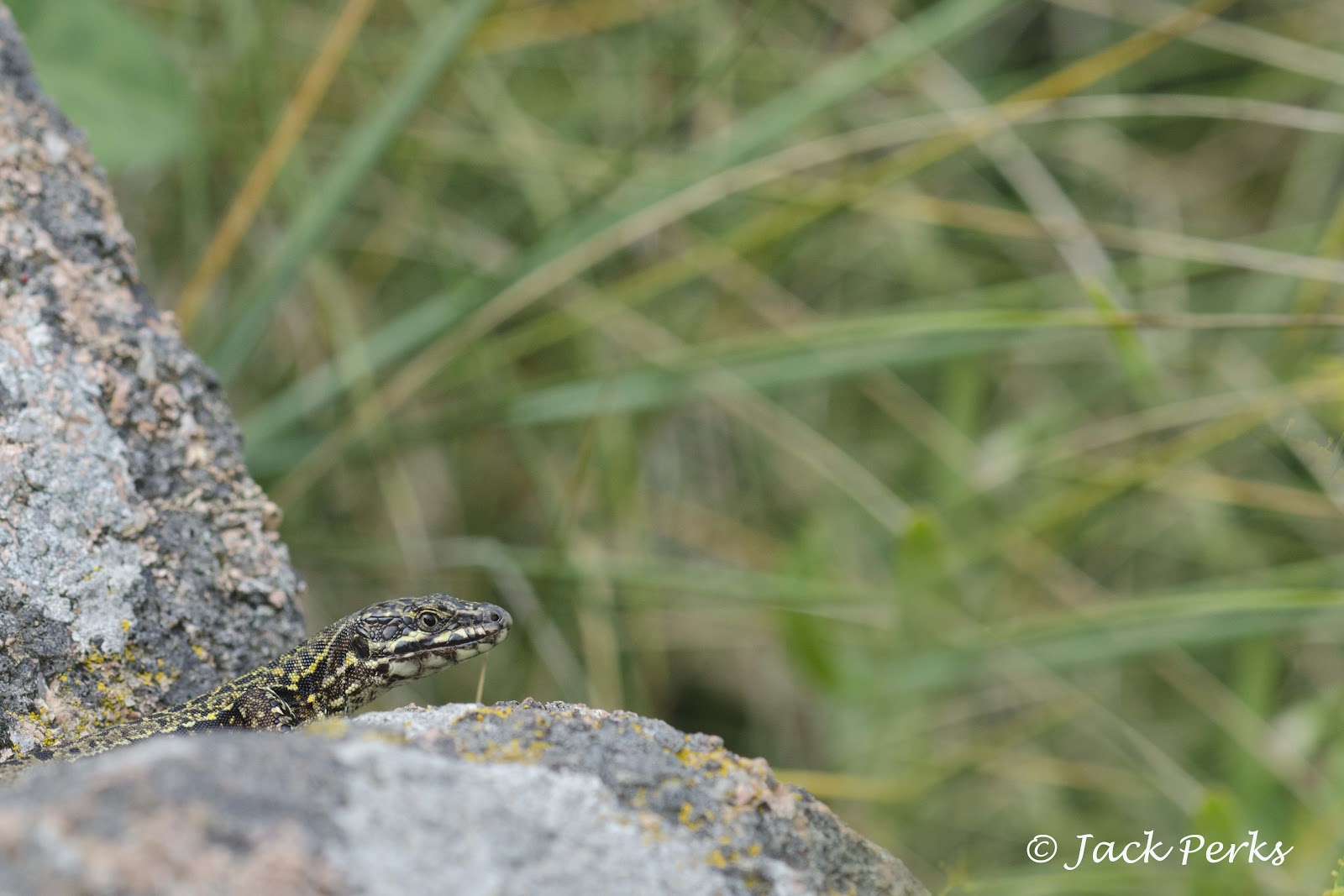
With reptiles being one of my main interests i was keen to find the two lizards that can be found on jersey and not mainland Britain naturally the wall lizard and green lizard.


The wall lizards turned out to be a pleasant surprise as they weren't to scared of people and allowed me to get quite close with causing distress to the animal.


Green lizards on the other had prefer a different type of habitat and needed a little more skill to get the shot. using techniques i've done with sand lizards and common lizards i got up early so they would be out basking and slow moving allowing me to get closer without them running of.

Hints -

- you dont have to go to the seringeti to get great wildlife shots and remember britain is a island nation with hundreds of islands containing wildlife the mainland doesn't.